


What does the increased activity of Lithuanian commercial real estate investors indicate?


Darius Tumas, Senior Investment Advisor at Ober-Haus
Article published on the Verslo žinios business news portal.
The second half of this year and 2024 are expected to see a rebound in the commercial real estate investment transaction market. Although foreign investors and the office segment remain inactive, the market as a whole is being driven by local players who have rediscovered commercial real estate as an investment opportunity against a backdrop of lower interest rates.
While it is perhaps premature to declare the Lithuanian commercial real estate investment market fully recovered, the statistics are positive and hint at broader trends.
According to Ober-Haus data, modern commercial real estate worth €183 million was purchased in Lithuania in the first half of 2024. This is almost twice as much as a year ago and close to the total for 2024. Almost half of this amount — €86 million — was spent on retail properties, while a third was allocated to warehouse and industrial buildings, a segment that has been performing strongly for some time. The market is encouraged not only by classic investments that generate stable income, but also by long-term development-focused investments.
The market is bolstered not only by traditional investments that generate stable income, but also by long-term investments geared towards development. One of the most prominent examples is the purchase of the Mykolas Romeris University building complex in Antakalnis by an investment fund for over €12 million. This investment is significant as it demonstrates a solid investor’s confidence in the future of the Lithuanian real estate market.
However, optimism is limited by two important factors: the office market remains weak, and foreign investors have likely departed for an extended period. Offices have been the driving force behind the commercial real estate market for many years, but they are currently facing sluggish tenant growth and a large supply of new space in the capital. Nevertheless, individual transactions are still taking place. Foreign investors, who previously accounted for more than half of the market, have lost interest since the start of the war. Their share of transactions reached a record low of 10% in the first half of 2025.
However, based on the last few months, it is reasonable to conclude that investors are returning to commercial real estate. According to Ober-Haus clients, changes in investment strategies are being driven by reduced borrowing costs, a corresponding decline in bond and financing yields, adaptation to the geopolitical situation and higher returns from commercial real estate. Let’s take a closer look at this.
As is well known, most of the commercial properties of various sizes that we see on the streets do not belong to the businesses operating in them, but rather to financial investors, such as funds, specialised companies, individuals or groups of individuals. It is no secret that private funds are usually invested in commercial real estate only up to the level required by banks, i.e. one-third of the property’s value or less. In lower-risk cases, such leveraged investment (e.g. a bank loan) currently pushes the established annual return of 7–8% into the double-digit zone for equity capital.
However, this trend was disrupted by the rapid rise in Euribor, which reached 4% in 2022. The overall increase in interest rates, combined with the bank’s margin, eroded almost all of the investment yield. Furthermore, property owners were reluctant to reduce the prices of properties for sale significantly at that time. These factors largely contributed to the decline in commercial real estate investment. However, since the beginning of 2024, rapidly falling interest rates and, more importantly, signs of stabilisation have made leveraged investment models extremely attractive again.
Conversely, money did not disappear from the market during that period; investors simply found alternatives. Some chose real estate abroad, while others opted for popular bond and crowdfunding offers. The maths were simple – why settle for single-digit returns from real estate when the aforementioned instruments were offering 10–14%? However, it now seems that this enthusiasm is waning, with bond and crowdfunding yields adjusting downward alongside interest rates in all capital markets. Some of the more high-profile stories of failure, including those related to real estate development financing, may also dampen enthusiasm further.
Finally, there is geopolitics to consider. It is difficult to argue that it has not only scared off foreign investors, but Lithuanian investors too. However, a year after the war began, Lithuanians were boldly investing in bonds to finance Lithuanian properties, which were offering returns that were several percent higher at the time. Paradoxically, in the event of war — which investors cited as the main reason for withdrawing from commercial real estate — other debtors financing real estate projects in Lithuania with bonds or crowdfunding platforms would also fail to meet their obligations. Put simply, it seems that investors have come to terms with our uncomfortable neighbourhood and are simply looking for the highest returns.
Of course, the strengthened market still lacks foreign investors, who would increase competition and liquidity. In a sense, the current situation resembles the period leading up to accession to the EU and NATO, when foreigners gradually discovered us thanks to profitability that was several times higher, which outweighed the initial concerns. Once again, local investors who know the region are enjoying higher returns and finding good investment opportunities with attractive yields.
Latest news
 All news
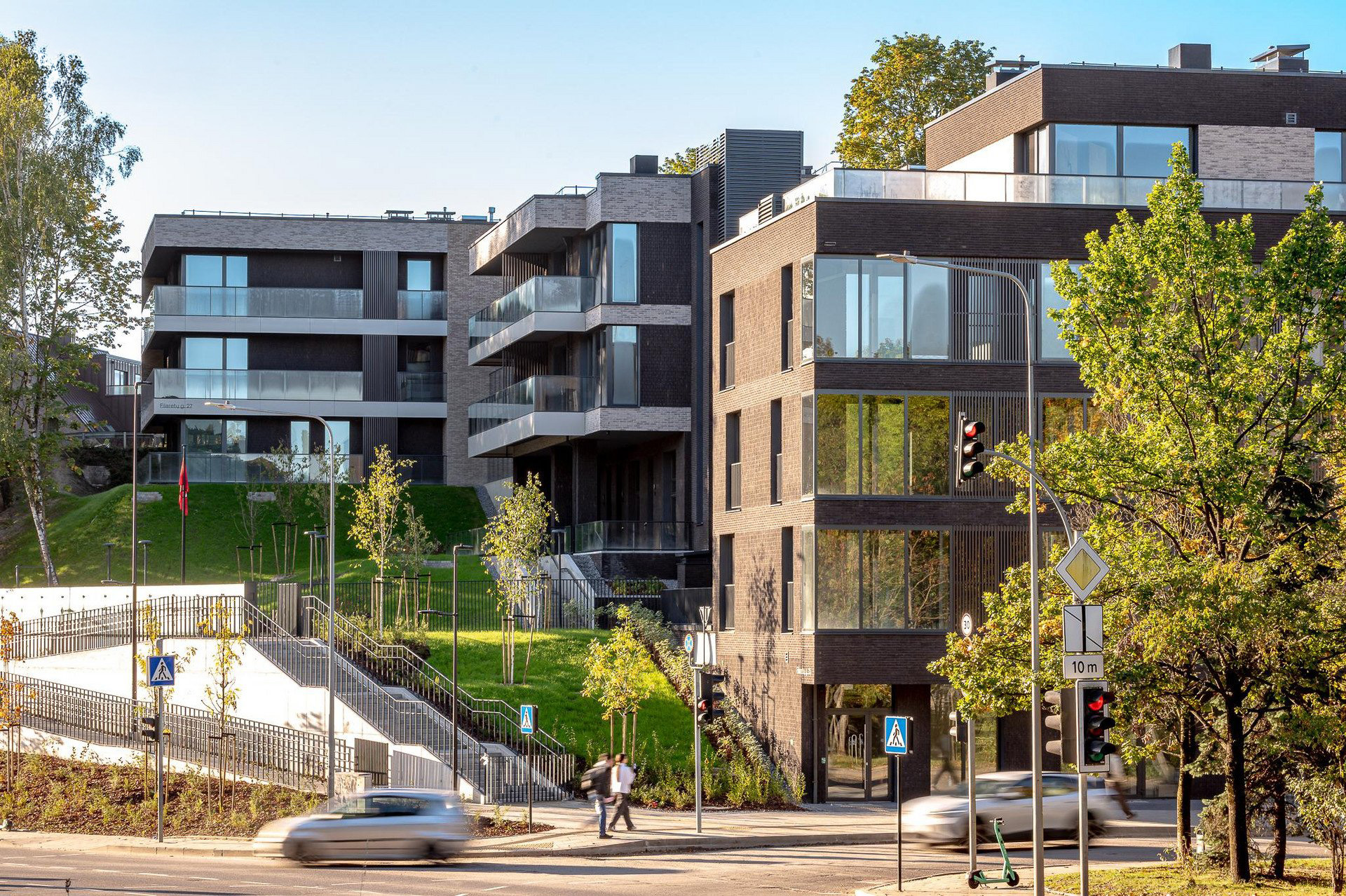
In 2025 developers built only…
In 2025, the Lithuanian housing market was characterised by a…
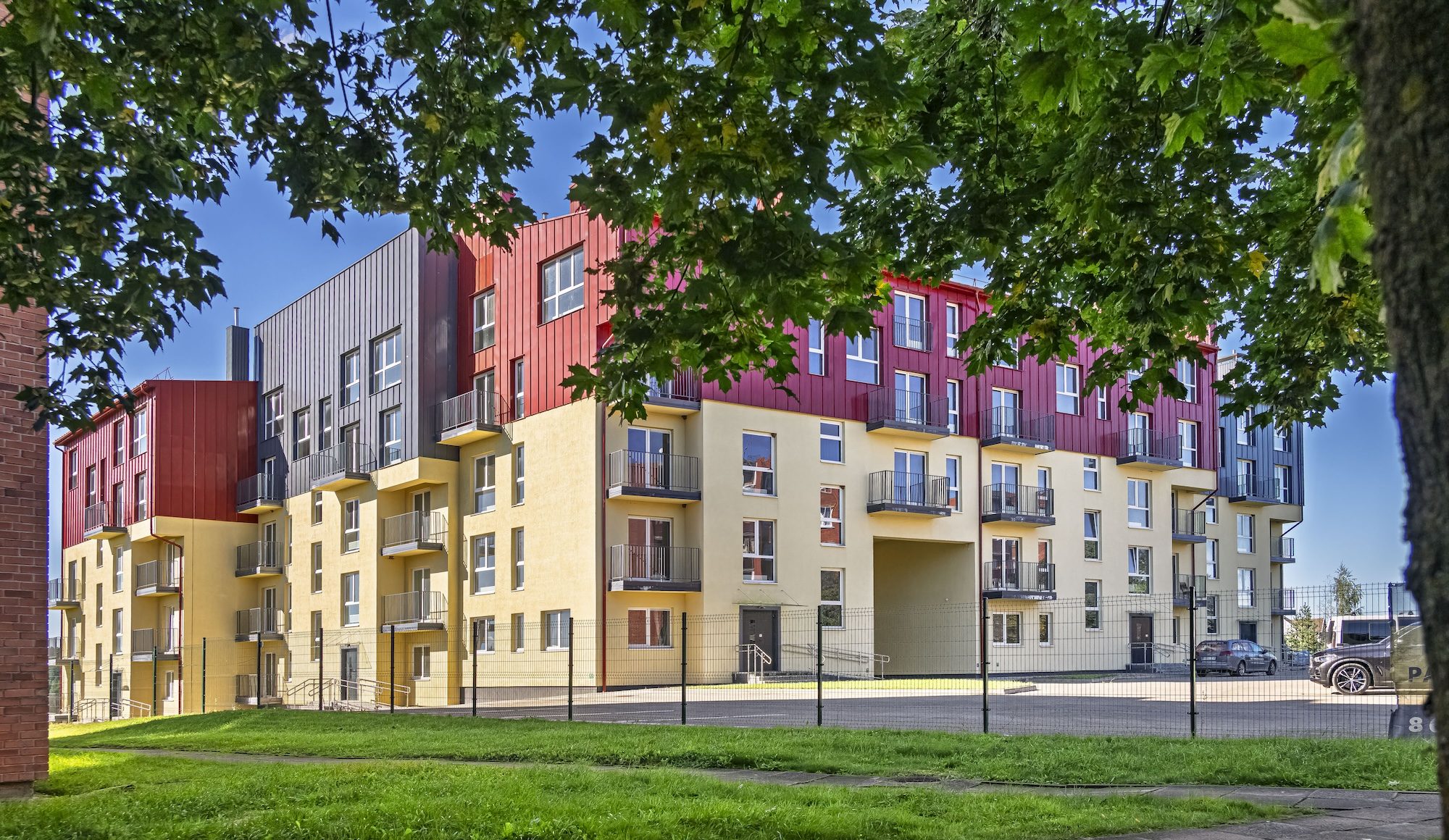
Sales of Dubysa Namai apartments…
The Dubysos Namai housing project in Ariogala is nearing completion.…

The Šiauliai housing market is…
Although housing prices in Šiauliai rose by 11% in 2025…
All news